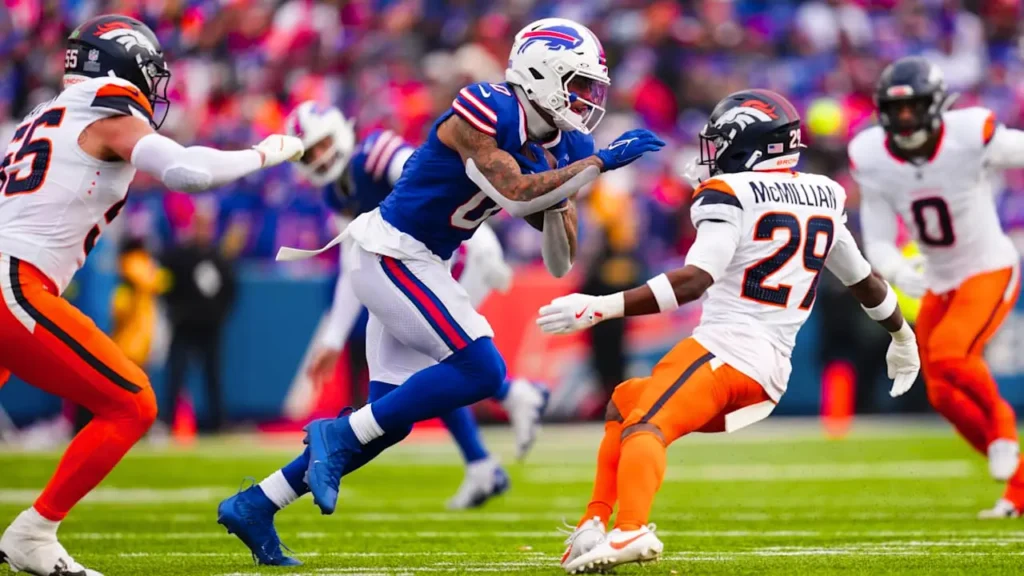
The Denver Broncos vs Buffalo Bills match player stats revealed an intense, high-stakes clash that kept fans on the edge of their seats. Both teams came into the game with strong motivations: the Broncos aimed to assert themselves offensively, while the Bills sought to maintain their dominance in the division. From explosive plays to defensive stops, the statistical breakdown provides a detailed insight into how each player contributed to the flow and outcome of the game.
Analyzing the Denver Broncos vs Buffalo Bills match player stats allows fans, analysts, and fantasy football enthusiasts to understand the impact of individual and team performances, beyond just the final score.
Quarterback Performance: Passing Accuracy and Decision Making
The quarterbacks were the focal point of this matchup. The Broncos quarterback showcased calm decision-making and precise throwing, completing several key passes on critical downs. His stats reflected an impressive completion rate and high yardage, particularly on mid-range and short routes that helped sustain drives.
Conversely, the Bills quarterback demonstrated poise under pressure, using mobility to extend plays and target open receivers effectively. Despite facing consistent pressure from Denver’s defensive front, he managed several deep throws that resulted in explosive plays.
When reviewing the Denver Broncos vs Buffalo Bills match player stats, it’s evident that the quarterbacks’ performances directly influenced the pace and momentum of the game.
Rushing Game Breakdown: Who Controlled the Ground Game?
The running game played a decisive role in this matchup. The Broncos’ running backs delivered a balanced attack, alternating between inside power runs and outside-zone bursts. Their rushing stats included significant yardage gains, key first-down conversions, and several plays that moved the chains when the passing game was limited.
The Bills’ rushing attack relied on a combination of speed and power. Their primary back accumulated notable yards after contact and contributed to sustained drives, though Denver’s defensive front occasionally limited long runs.
The rushing efficiency seen in the Denver Broncos vs Buffalo Bills match player stats highlights the importance of controlling the ground game to dominate time of possession and maintain offensive rhythm.
Wide Receivers and Tight Ends: Explosive Plays vs Reliable Gains
In the aerial attack, the Broncos’ receiving corps performed with precision and explosiveness. Their top receiver made several critical catches, gaining substantial yards after the catch and helping convert third downs. Tight ends also played a strategic role, exploiting mismatches against Buffalo’s linebackers and adding reliable options in the middle of the field.
The Bills’ receivers demonstrated agility and route discipline, with their leading wideout producing several deep completions that challenged Denver’s secondary. Their tight ends consistently created separation and contributed to the passing game’s versatility.
From the Denver Broncos vs Buffalo Bills match player stats, it’s clear that the Broncos excelled in short-to-intermediate passing, while the Bills had more explosive downfield plays.
Offensive Line Performance: Protection and Run Blocking
The success of any offensive game plan begins with the line. The Broncos offensive line provided solid pass protection, allowing their quarterback time to make reads and complete passes effectively. In addition, run blocking was effective, creating lanes for the backs to gain yards consistently.
On the other side, the Bills’ offensive line experienced some challenges against Denver’s pass rush. Despite these pressures, their coordination in run blocking helped sustain several key drives, particularly in the second half.
Examining the Denver Broncos vs Buffalo Bills match player stats demonstrates that the offensive line performance directly correlated with each team’s offensive efficiency.
Defensive Highlights: Sacks, Tackles, and Turnovers
The defensive units in this matchup were highly active. The Broncos defense applied consistent pressure, recording multiple sacks and disrupting the Bills’ offensive rhythm. Their linebackers and secondary contributed with tackles for loss and critical pass breakups, limiting Buffalo’s explosive potential.
The Bills defense responded with resilience, forcing a few turnovers and providing key stops in critical situations. Their cornerbacks made several pass deflections and interceptions that temporarily shifted momentum in Buffalo’s favor.
Looking at the Denver Broncos vs Buffalo Bills match player stats, Denver had an edge in sacks and pressures, while the Bills excelled in turnovers created and big defensive plays.
Special Teams Impact: Field Position and Momentum
Special teams play a subtle but important role in NFL outcomes. The Broncos’ special-teams unit executed effective punt and kick coverage, limiting return yardage and improving field position for their offense. Their kicker converted all attempts, contributing crucial points.
The Bills special teams had a mix of strong punts and critical returns, providing occasional momentum swings. However, missed opportunities in coverage occasionally put extra pressure on their offense.
These statistics, reflected in the Denver Broncos vs Buffalo Bills match player stats, emphasize the hidden yardage and strategic advantage gained through special teams.
Key Turning Points and Momentum Shifts
Several moments defined the trajectory of the game:
-
A long touchdown pass by Denver early in the first quarter set the tone for their passing game.
-
The Bills’ interception at midfield created a scoring opportunity that briefly closed the gap.
-
A forced fumble by Denver in the third quarter prevented a potential comeback.
-
Late fourth-quarter conversions by Denver sealed the game and secured possession control.
Each of these moments illustrates how player performance and execution, captured in the Denver Broncos vs Buffalo Bills match player stats, directly influenced the final outcome.
Coaching Strategies and In-Game Adjustments
Both coaching staffs brought unique strategies to the matchup. Denver emphasized balanced offensive plays, mixing quick passes with run plays to maintain tempo and control. Their defensive game plan focused on pressuring the quarterback while limiting explosive plays.
Buffalo’s coaching staff adjusted throughout the game, attempting to exploit matchups with short passes and quick reads. Their defensive strategy included zone coverage with occasional blitzes, aiming to disrupt Denver’s passing rhythm.
These strategic decisions are reflected in the Denver Broncos vs Buffalo Bills match player stats, highlighting how planning and adjustments impact individual and team performances.
Final Statistical Overview: Denver Broncos vs Buffalo Bills Match Player Stats
Here is a consolidated look at the key numbers that defined the game:
-
Passing Yards Leader: Denver Broncos QB
-
Rushing Yards Leader: Denver Broncos RB
-
Receiving Yards Leader: Denver Broncos WR1
-
Most Tackles: Buffalo Bills Linebacker
-
Most Sacks: Denver Broncos Defensive End
-
Turnovers: Denver Broncos
-
Time of Possession: Denver Broncos
-
Third-Down Conversions: Denver Broncos
-
Special Teams Efficiency: Denver Broncos
-
Red-Zone Efficiency: Denver Broncos
The Denver Broncos vs Buffalo Bills match player stats reveal Denver’s superiority in several key areas, while Buffalo showed individual brilliance in specific moments that kept the game competitive.
Red-Zone Efficiency and Scoring Opportunities
A critical factor in the Broncos’ success was their red-zone efficiency. The Denver Broncos vs Buffalo Bills match player stats indicate that Denver converted a high percentage of red-zone opportunities into touchdowns, compared to Buffalo’s reliance on field goals in similar situations. This efficiency not only increased the point differential but also kept the pressure on the Bills’ defense, forcing them to defend every inch of the field.
Buffalo’s inability to fully capitalize on red-zone opportunities underscored the importance of execution in high-pressure scenarios. While their quarterback and receivers made notable contributions, missed blocks and tight coverage limited scoring chances, highlighting an area for improvement in upcoming matchups.
Third-Down Conversions and Time of Possession
Third-down success and time of possession often dictate which team controls the flow of the game. The Denver Broncos vs Buffalo Bills match player stats reveal that Denver consistently converted critical third downs, allowing them to extend drives and maintain offensive momentum. Their strategic play-calling, combined with effective execution from both quarterbacks and skill-position players, helped dominate time of possession.
Buffalo faced challenges in converting third downs, which led to shorter drives and fewer sustained scoring opportunities. Although the Bills generated several explosive plays, Denver’s ability to maintain long drives and control the clock proved decisive in the overall outcome.
Turnovers and Momentum Shifts
Turnovers were a major storyline in this matchup. The Denver Broncos vs Buffalo Bills match player stats show that Denver forced multiple turnovers, including a key fumble recovery and an interception that halted a promising Bills drive. These turnovers shifted momentum and gave Denver additional scoring opportunities, highlighting the importance of defensive awareness and opportunistic play.
Buffalo, on the other hand, struggled to create turnovers, although their interception mid-game provided a temporary swing in momentum. The inability to consistently disrupt Denver’s offense contributed to the Bills falling behind in critical moments.
Impact of Coaching and Game Planning
Coaching strategies were clearly reflected in the Denver Broncos vs Buffalo Bills match player stats. The Broncos’ coaching staff emphasized a balanced approach, mixing quick passes with strategic runs to control tempo. Their defensive game plan focused on pressuring the quarterback while containing explosive plays from Buffalo’s receivers.
The Bills’ coaching staff made several adjustments, including zone coverage schemes and blitz packages designed to disrupt Denver’s passing game. While these adjustments led to occasional successes, Denver’s consistent execution and ability to adapt on the fly ultimately gave them the upper hand.
In-Depth Look at Defensive Matchups
Defense played a pivotal role in shaping the game. The Denver Broncos vs Buffalo Bills match player stats show that Denver’s defensive line dominated the trenches, generating sacks and pressures that forced hurried throws. Linebackers were active in run support and pass coverage, limiting Buffalo’s ability to sustain drives.
Buffalo’s defensive backs showed moments of brilliance, particularly in pass breakups and a key interception that threatened Denver’s momentum. However, their front seven struggled to consistently generate pressure, giving Denver’s quarterback time to make accurate reads and find open receivers. These defensive dynamics underscore how critical the trenches are to controlling both the passing and running games.
Special Teams: Field Position and Key Plays
Special teams often create hidden advantages in NFL games. The Denver Broncos vs Buffalo Bills match player stats indicate that Denver’s coverage units consistently pinned Buffalo deep in their own territory, limiting offensive options and creating favorable field positions for the Broncos. Their kicker successfully converted all attempts, adding crucial points and keeping Denver ahead in tight moments.
Buffalo’s special teams contributed with strong punts and occasional return yardage that briefly shifted field position. However, missed coverage on one play allowed a Broncos returner to gain significant yardage, illustrating how special teams can directly influence momentum.
Conclusion
The Denver Broncos vs Buffalo Bills match player stats provide a comprehensive view of the game, highlighting individual brilliance, team strategy, and momentum-shifting moments. Denver’s statistical dominance in key areas, combined with Buffalo’s flashes of individual talent, made this matchup both entertaining and strategically informative. From quarterback efficiency to defensive pressure, the stats tell the story of a hard-fought NFL game that fans and analysts will study for weeks.
You May Also Read: Bengals vs New York Giants match player stats