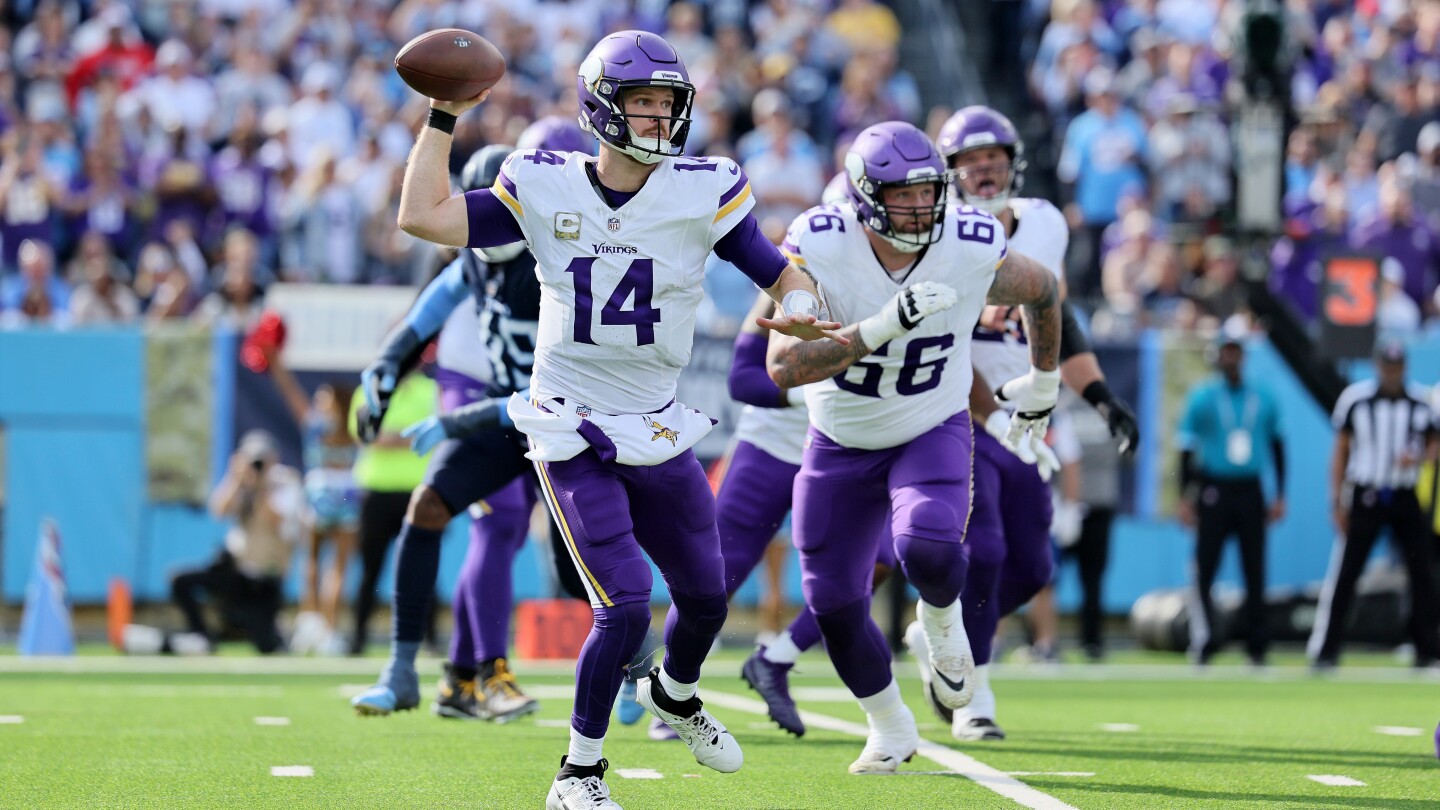
The Minnesota Vikings vs Chicago Bears match player stats reveal a hard-fought NFC North clash filled with strategy, individual brilliance, and critical plays. Both teams showcased contrasting styles: the Vikings relied on a balanced offensive attack with strong passing efficiency, while the Bears emphasized a ground-oriented rushing game and aggressive defensive schemes. The statistics from this game provide insight into each player’s contribution and highlight the key moments that shaped the final outcome. From quarterback performance to defensive impact, the numbers paint a detailed picture of how the game unfolded.
Quarterback Performance Analysis
Quarterback play was central to the Minnesota Vikings vs Chicago Bears match player stats. The Vikings’ quarterback delivered a precise performance, maintaining a high completion percentage while spreading the ball effectively among multiple receivers. His decision-making limited turnovers, which proved crucial in controlling the tempo. The Bears’ quarterback displayed resilience, connecting on several long passes and showcasing mobility to extend plays. Despite impressive yardage, he faced significant pressure from the Vikings’ defensive front, which forced some hurried throws and occasional incompletions that impacted efficiency.
Rushing Game Breakdown
The rushing statistics highlight contrasting offensive strategies in the Minnesota Vikings vs Chicago Bears match player stats. Minnesota utilized a mix of power and zone runs, generating consistent yardage and controlling the clock. Their running backs were effective after contact, contributing to sustained drives and creating favorable down-and-distance situations. Chicago leaned on speed and misdirection, with running backs and the quarterback combining for several explosive runs. However, inconsistencies on early downs limited the Bears’ ability to dominate time of possession despite flashes of big plays.
Receiving Corps and Passing Stats
Receiving performance played a significant role in the Minnesota Vikings vs Chicago Bears match player stats. The Vikings’ wide receivers consistently converted crucial third downs, and their tight ends were key targets in short-to-intermediate ranges. Chicago’s receiving unit displayed big-play potential, recording multiple long completions that stretched the defense. However, drops and tight coverage limited their red-zone efficiency. Both teams’ receiving stats highlight the importance of execution and timing in creating scoring opportunities.
Offensive Line and Protection Stats
The offensive line performance significantly influenced the Minnesota Vikings vs Chicago Bears match player stats. Minnesota’s line excelled in pass protection and run blocking, allowing the quarterback ample time to make reads and creating running lanes. The Bears’ offensive line faced challenges against Minnesota’s pass rush, resulting in several sacks and hurried throws. These stats underline the importance of offensive line play in determining both quarterback efficiency and rushing success.
Defensive Standouts and Tackles
Defense was a key factor in the Minnesota Vikings vs Chicago Bears match player stats. Minnesota’s linebackers led the team in tackles, disrupting the Bears’ running game and maintaining solid coverage in the secondary. Chicago’s defensive line pressured the quarterback effectively at times, while its linebackers and safeties contributed with key stops. The statistical impact of these defensive players demonstrates how critical tackling, pass rush, and coverage were in shaping the flow of the game.
Turnovers and Game-Changing Plays
Turnovers had a decisive impact on the Minnesota Vikings vs Chicago Bears match player stats. Minnesota capitalized on critical turnovers, including interceptions and forced fumbles, which shifted momentum and provided scoring opportunities. Chicago’s defense generated pressure but struggled to consistently create takeaways, limiting its ability to turn the tide. The turnover differential played a significant role in time of possession and overall scoring efficiency for both teams.
Special Teams Contributions
Special teams were an important factor in the Minnesota Vikings vs Chicago Bears match player stats. Minnesota’s kicker converted field goals and extra points efficiently, while the punting unit helped pin Chicago deep and manage field position. The Bears’ special teams displayed some explosive return plays, but coverage breakdowns and penalties limited overall impact. These stats highlight how special teams can subtly influence game flow and field position.
Red Zone and Scoring Efficiency
Red zone efficiency is a critical part of the Minnesota Vikings vs Chicago Bears match player stats. Minnesota’s offense converted a high percentage of red zone opportunities into touchdowns, showcasing strategic play-calling and execution. The Bears, while reaching the red zone multiple times, often settled for field goals due to tight defensive coverage and missed opportunities. These statistics underline the importance of scoring efficiency in determining the final outcome of closely contested games.
Third Down and Possession Metrics
Third-down performance and possession time were significant in the Minnesota Vikings vs Chicago Bears match player stats. Minnesota maintained a strong conversion rate, extending drives and controlling the clock, which put pressure on the Bears’ defense. Chicago achieved success on select third downs but struggled with consistency, limiting their offensive momentum. These possession stats reveal how sustained efficiency can be more valuable than sporadic big plays.
Penalty Analysis and Discipline
Penalties impacted both teams’ performances in the Minnesota Vikings vs Chicago Bears match player stats. Minnesota displayed discipline, committing fewer infractions and avoiding drive-stopping penalties. Chicago’s aggressive approach led to several penalties at crucial moments, impacting field position and momentum. The stats highlight how disciplined play often correlates with better overall performance in high-stakes divisional matchups.
Player Efficiency Ratings and Advanced Metrics
Advanced metrics in the Minnesota Vikings vs Chicago Bears match player stats, such as yards per play and quarterback efficiency ratings, offer deeper insight. Minnesota posted higher overall efficiency, reflecting consistent execution across both passing and rushing. Chicago’s metrics showed flashes of explosive potential but highlighted inefficiencies in critical situations, particularly under pressure. These numbers reinforce the narrative of how each team capitalized—or failed to capitalize—on opportunities.
Second-Half Adjustments and Performance Shifts
Second-half adjustments were evident in the Minnesota Vikings vs Chicago Bears match player stats. Minnesota’s offense became more balanced, incorporating quick passes and play-action to maintain possession, while its defense tightened coverage and limited explosive plays. Chicago attempted to speed up the tempo and increase passing frequency, resulting in higher yardage totals but inconsistent scoring. These statistical shifts demonstrate how in-game strategy and adaptation can influence outcomes.
Standout Individual Performances
Several players stood out in the minnesota vikings vs chicago bears match player stats. Minnesota’s running back recorded impressive yards after contact, while their top receiver was instrumental in converting third downs. On defense, a linebacker recorded multiple tackles for loss, disrupting Chicago’s rhythm. Chicago had notable performers as well, including a wide receiver with explosive catches and a defensive lineman generating consistent pressure. These individual stats provide a closer look at the players who had the most impact.
Rushing Yards and Backfield Efficiency
Rushing efficiency played a key role in the Minnesota Vikings vs Chicago Bears match player stats. Minnesota’s lead running back averaged significant yards per carry, particularly after initial contact, demonstrating vision and physicality. Their secondary rushers contributed with key gains in short-yardage situations, sustaining drive momentum. Chicago’s ground game emphasized speed and misdirection, with both running backs and the quarterback contributing to explosive runs. However, consistency was a challenge, as defensive tackles from Minnesota frequently limited gains to minimal yardage. The rushing yards and yards-after-contact stats highlight the Vikings’ ability to control tempo and the Bears’ reliance on big-play potential to generate offensive momentum.
Passing Game Metrics and Receiver Contributions
In the Minnesota Vikings vs Chicago Bears match, player stats and passing efficiency were pivotal. Minnesota’s quarterback recorded high completion rates, particularly targeting the top wide receivers and tight ends in critical situations. Third-down conversions relied heavily on short, precise passes, while deep passes exploited mismatches in Chicago’s secondary. The Vikings’ receiving corps combined for substantial yardage after catch, reflecting both skill and route execution. Chicago’s passing game showed bursts of effectiveness, with one or two receivers producing long receptions that challenged Minnesota’s defensive strategy. However, dropped passes and tight coverage in the red zone limited Chicago’s scoring potential. These passing stats demonstrate how precision and timing can impact both yardage accumulation and scoring opportunities.
Defensive Pressure and Sack Statistics
The Minnesota Vikings vs Chicago Bears match player stats also highlight defensive performance. Minnesota’s defensive line consistently pressured Chicago’s quarterback, resulting in multiple sacks and hurried throws. Linebackers contributed with tackles for loss, disrupting both passing and running lanes. Chicago’s defensive line created moments of pressure, particularly in early drives, but lacked sustained disruption. Pass deflections, quarterback hits, and sack statistics emphasize the significance of defensive execution in shaping game outcomes. Minnesota’s ability to generate pressure without overcommitting allowed the defense to maintain structure and effectiveness throughout the game.
Turnovers and Impact on Game Flow
Turnovers are often decisive in divisional matchups, and the Minnesota Vikings vs Chicago Bears match player stats reflect this trend. Minnesota capitalized on turnovers at pivotal moments, generating scoring opportunities and shifting momentum. Interceptions and forced fumbles were instrumental in halting Chicago’s drives and providing favorable field position. Chicago’s defense, while aggressive, struggled to convert pressure into takeaways consistently. The turnover differential is a clear reflection of strategic execution, highlighting how Minnesota’s ability to protect the ball and capitalize on errors shaped the statistical narrative of the game.
Time of Possession and Game Control
Time of possession played a critical role in the Minnesota Vikings vs Chicago Bears match player stats. Minnesota controlled the clock through sustained drives and effective rushing, limiting Chicago’s offensive opportunities. The Bears’ quicker possessions highlighted explosive play potential but lacked consistency to sustain momentum. This possession disparity influenced fatigue, defensive performance, and late-game execution.
Conclusion
The Minnesota Vikings vs Chicago Bears match player stats provide a comprehensive view of how the game unfolded. Minnesota’s balanced offensive approach, disciplined defense, and efficient execution translated into consistent performance across multiple statistical categories. Chicago showcased athleticism and playmaking ability but struggled with consistency and red zone execution. The stats not only tell the story of this NFC North matchup but also offer valuable insights into each team’s strengths, weaknesses, and potential adjustments for future games.
You May Also Read: Seahawks vs Arizona Cardinals match player stats