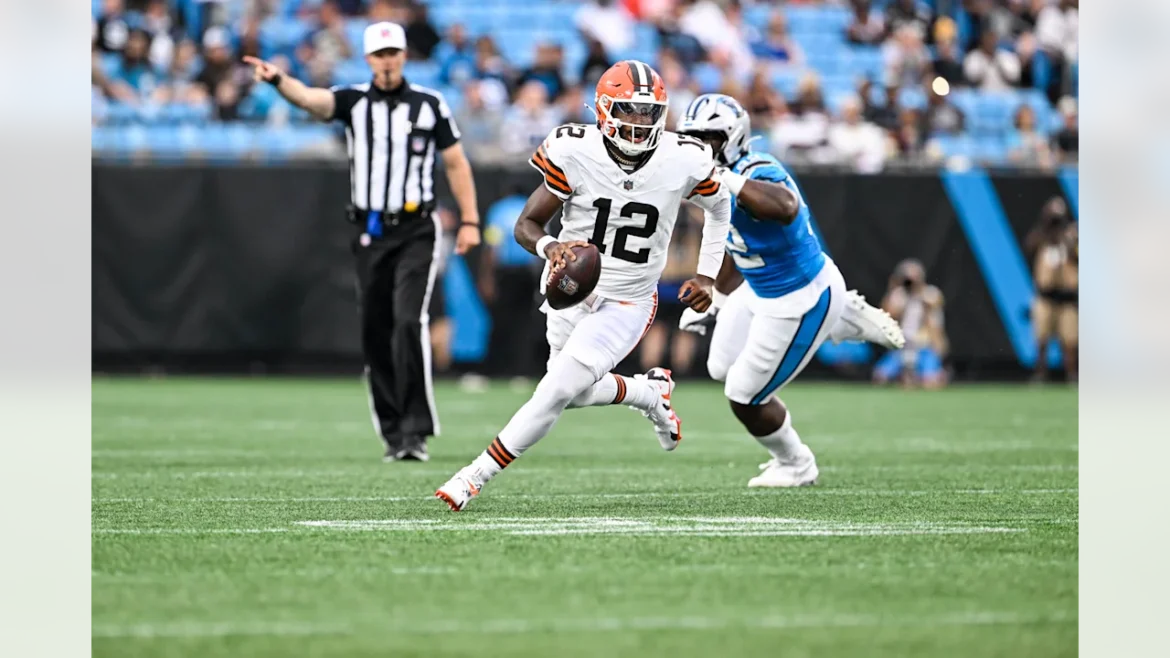
The matchup between the Cleveland Browns and the Carolina Panthers has always drawn interest from NFL fans who enjoy seeing contrasting playing styles collide on the field. When analyzing the Cleveland Browns vs Carolina Panthers match player stats, it becomes clear that individual performances often shape the outcome as much as team strategy. This article delivers an in-depth, stat-focused breakdown of player contributions, offensive efficiency, defensive dominance, and key moments that defined the game. Whether you’re a fantasy football enthusiast, a data-driven analyst, or a casual NFL follower, this detailed review provides a comprehensive understanding of how the match unfolded through player statistics.
Quarterback Performance Comparison and Passing Efficiency
Quarterbacks play the most influential role in any NFL contest, and the Cleveland Browns vs Carolina Panthers clash was no exception. Cleveland’s quarterback entered the game with a clear focus on balanced execution, utilizing both short passes and occasional deep throws to stretch the defense. Statistically, the Browns’ signal-caller posted solid completion numbers, maintaining an efficient completion percentage that kept the offense moving steadily down the field. His passing yards reflected consistency rather than explosive volume, highlighting a game plan centered on control and precision.
On the Carolina Panthers’ side, the quarterback performance showcased resilience and adaptability. Despite facing pressure from Cleveland’s defensive front, the Panthers quarterback demonstrated poise by extending plays and finding receivers in tight coverage. His passing attempts were higher, reflecting Carolina’s need to rely more heavily on aerial offense. The stat line included respectable yardage totals, though occasional sacks and hurried throws affected overall efficiency. Comparing both quarterbacks’ stats reveals how Cleveland leaned on ball security, while Carolina took calculated risks to generate momentum.
Running Back Contributions and Ground Game Impact
When reviewing Cleveland Browns vs Carolina Panthers match player stats, the running game emerges as a defining element of the contest. Cleveland’s running backs delivered a powerful performance, combining speed and physicality to control time of possession. The primary Browns rusher accumulated impressive rushing yards, averaging strong yards per carry and consistently pushing the pile forward. These numbers reflected Cleveland’s commitment to establishing the run early and wearing down Carolina’s defensive line.
Carolina’s running backs, on the other hand, showed flashes of explosiveness but faced a tougher challenge breaking through Cleveland’s disciplined run defense. While the Panthers recorded respectable rushing attempts, their total rushing yards lagged behind Cleveland’s output. Still, Carolina’s lead-back contributed significantly in dual-threat fashion, adding receiving yards out of the backfield. The contrast in rushing stats illustrated how Cleveland dominated tempo through the ground game, while Carolina relied more on versatility than brute force.
Wide Receiver and Tight End Receiving Statistics
The receiving units from cleveland browns vs carolina panthers match player stats. Both teams brought distinct strengths to the field. Cleveland’s wide receivers focused on efficiency, converting key third-down receptions and capitalizing on play-action opportunities. The leading Browns receiver recorded solid reception totals and dependable yardage, emphasizing route precision rather than explosive plays. Tight ends also played a crucial role, contributing important catches in the middle of the field and red-zone situations.
Carolina’s receivers showcased speed and athleticism, producing several highlight-worthy catches. The Panthers’ top wideout led the team in receiving yards, stretching the field and forcing Cleveland’s secondary to adjust coverage. Tight end involvement was noticeable as well, particularly in short-yardage situations where reliable hands were essential. Analyzing receiving stats from the Cleveland Browns vs Carolina Panthers matchup highlights Cleveland’s consistency-driven approach versus Carolina’s reliance on big-play potential.
Offensive Line Performance and Protection Metrics
Offensive line statistics may not always appear in traditional box scores, but their impact is undeniable. Cleveland’s offensive line excelled in pass protection, allowing relatively few sacks and providing ample time for the quarterback to progress through reads. The rushing lanes they created translated directly into strong rushing stats, underscoring their dominance in the trenches.
Carolina’s offensive line faced a stiffer test against Cleveland’s aggressive defensive front. Sack totals and quarterback pressures reflected the challenges they encountered throughout the game. Despite these difficulties, the Panthers’ line demonstrated resilience, making adjustments in the second half to improve protection. These protection metrics played a significant role in shaping the overall Cleveland Browns vs Carolina Panthers match player stats narrative.
Defensive Standouts and Tackle Leaders
Defense often determines the fine margins in closely contested NFL games, and this matchup highlighted several standout performers. Cleveland’s defense was anchored by linebackers who led the team in total tackles, frequently stopping plays at or near the line of scrimmage. Their tackling efficiency minimized yards after contact and limited Carolina’s ability to gain momentum.
Carolina’s defense also delivered noteworthy individual performances. The Panthers’ leading tackler recorded double-digit stops, demonstrating range and awareness across the field. Defensive backs contributed with pass breakups and timely coverage plays, preventing Cleveland from converting several potential big gains. Comparing defensive player stats reveals how both teams relied on disciplined tackling and positional awareness to control key moments.
Pass Rush, Sacks, and Quarterback Pressure Stats
One of the most telling elements of the Cleveland Browns vs Carolina Panthers match player stats was the pass rush battle. Cleveland’s defensive line consistently pressured Carolina’s quarterback, recording multiple sacks and numerous quarterback hits. These pressures disrupted timing and forced hurried throws, directly impacting Carolina’s passing efficiency.
Carolina’s pass rush, while less dominant statistically, still made its presence felt at critical moments. A key sack or pressure on third down helped stall Cleveland’s drives and kept the Panthers competitive. The sack and pressure stats highlight Cleveland’s overall defensive advantage while acknowledging Carolina’s ability to generate momentum-shifting plays.
Turnovers, Interceptions, and Ball Security Analysis
Turnovers are often decisive, and this matchup reinforced that principle. Cleveland demonstrated strong ball security, committing few, if any, turnovers and capitalizing on Carolina’s mistakes. Interception stats favored the Browns, as their defensive backs successfully read the quarterback and exploited passing lanes.
Carolina’s turnover numbers reflected moments of forced aggression, particularly when attempting to close scoring gaps. While interceptions and fumbles can be costly, they also illustrate the Panthers’ willingness to take risks. The turnover comparison in the Cleveland Browns vs Carolina Panthers match player stats underscores how Cleveland’s disciplined approach translated into control and efficiency.
Special Teams Performance and Field Position Statistics
Special teams play a crucial yet often overlooked role in NFL games. Cleveland’s special teams unit delivered consistent kicking accuracy and effective punt coverage, ensuring favorable field position throughout the game. The kicker’s field goal percentage and extra-point reliability added valuable points and confidence.
Carolina’s special teams showed flashes of excellence, particularly in return yardage. Kick and punt returns provided occasional sparks that energized the offense. However, minor coverage lapses affected overall field position metrics. Evaluating special teams stats adds another layer to understanding the complete Cleveland Browns vs Carolina Panthers match player stats picture.
Red Zone Efficiency and Scoring Breakdown
Red zone performance often separates winning teams from losing ones. Cleveland excelled in converting red zone opportunities into touchdowns, reflected in strong scoring efficiency stats. Their ability to finish drives minimized reliance on field goals and maintained scoreboard pressure.
Carolina’s red zone stats indicated mixed results. While the Panthers reached scoring territory multiple times, they occasionally settled for field goals rather than touchdowns. These differences in red zone execution were pivotal, reinforcing Cleveland’s edge in situational football.
Time of Possession and Drive Efficiency Metrics
Time of possession stats further illustrate Cleveland’s game control. By sustaining longer drives and executing efficiently on third downs, the Browns dominated possession metrics. This approach kept Carolina’s offense off the field and contributed to defensive freshness late in the game.
Carolina’s drive efficiency stats highlighted shorter, quicker possessions, often driven by passing plays. While this allowed for rapid scoring attempts, it also increased exposure to defensive pressure. These possession and efficiency metrics round out the Cleveland Browns vs Carolina Panthers match player stats analysis.
Individual Player Highlights and Key Performances
Several individual performances stood out beyond the raw numbers. Cleveland’s lead running back delivered a game-defining performance, combining rushing yards, touchdowns, and physical dominance. Defensive leaders set the tone with high tackle counts and impactful plays.
For Carolina, standout receivers and defensive leaders demonstrated determination and skill despite challenging circumstances. These individual highlights add context to the statistical data, reminding fans that behind every number is a moment of athletic excellence.
Coaching Influence Reflected in Player Statistics
Coaching strategies are often reflected in player stats. Cleveland’s balanced offensive distribution and disciplined defensive metrics suggest a well-executed game plan. Player utilization stats indicate thoughtful rotation and situational awareness.
Carolina’s stats reveal adjustments and experimentation, particularly in offensive play-calling. While not all risks paid off statistically, they showcased the coaching staff’s adaptability. Understanding coaching influence helps interpret the Cleveland Browns vs Carolina Panthers match player stats more holistically.
Fantasy Football Implications from Match Player Stats
From a fantasy football perspective, this matchup provided valuable insights. Cleveland players delivered consistent fantasy points, particularly running backs and defensive units. Their reliable stat lines made them dependable roster choices.
Carolina players offered higher variance, with receivers producing strong yardage but inconsistent scoring. Fantasy managers analyzing the Cleveland Browns vs Carolina Panthers match player stats can draw lessons about player reliability and matchup-based decision-making.
Historical Context and Statistical Trends Between the Teams
Looking beyond a single game, historical trends between Cleveland and Carolina reveal evolving dynamics. Past matchups show shifts in offensive focus and defensive schemes, reflected in changing stat patterns. This game continued those trends, emphasizing Cleveland’s physicality and Carolina’s adaptability.
These broader trends help contextualize individual player stats, offering insight into how each franchise approaches interconference matchups.
Final Thoughts
The Cleveland Browns vs Carolina Panthers match player stats tell a story of strategic contrast, disciplined execution, and individual brilliance. Cleveland’s consistency, ball control, and defensive pressure translated into statistical advantages across key categories. Carolina’s resilience, athleticism, and willingness to take risks added excitement and competitive tension throughout the game.
By examining quarterback efficiency, rushing dominance, receiving contributions, defensive impact, and special teams performance, this comprehensive breakdown highlights how numbers reflect the narrative of the game. Player stats do more than record outcomes—they capture momentum shifts, strategic decisions, and moments that define NFL football. For fans and analysts alike, this matchup serves as a compelling example of how data and performance intersect on the gridiron.
You May Also Read: Minnesota Vikings vs Chicago Bears match player stats