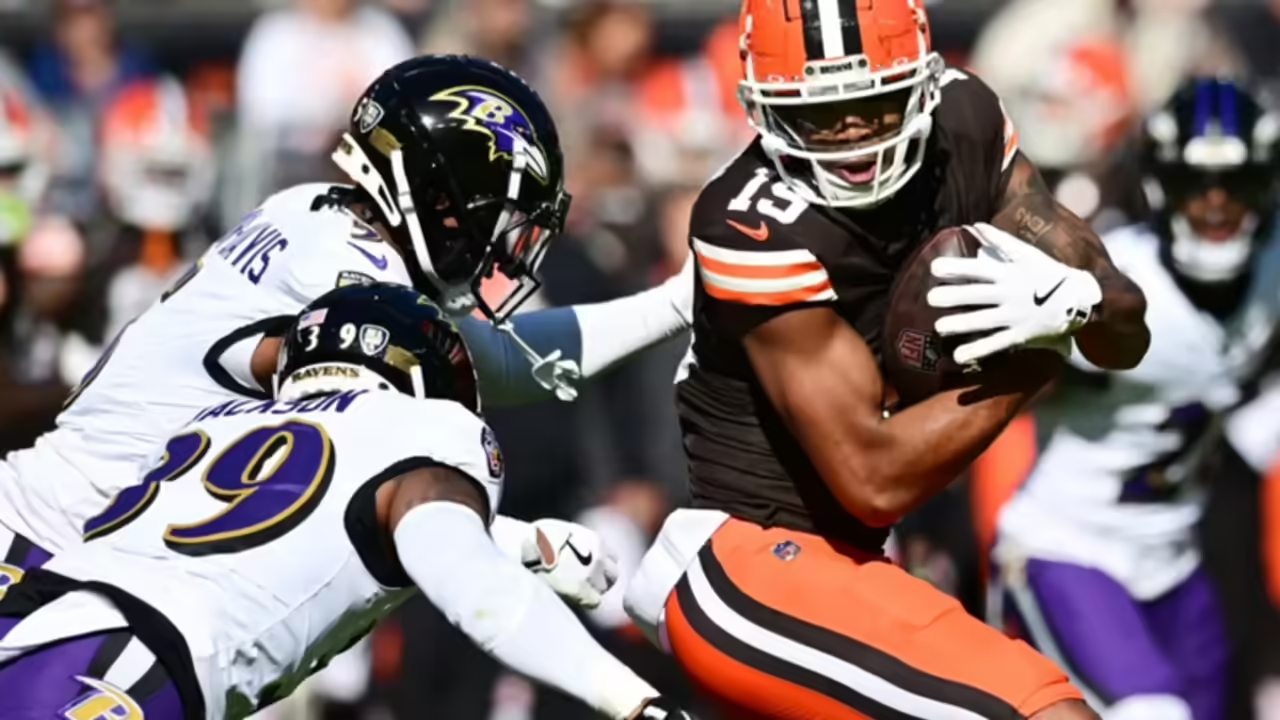
Introduction to the cleveland browns vs baltimore ravens match player stats
The Cleveland Browns vs Baltimore Ravens matchup is one of the most intense and strategically rich rivalries in the NFL, especially within the AFC North. Every time these two teams meet, the contest goes far beyond the final score. Fans, analysts, and fantasy football enthusiasts closely analyze the Cleveland Browns vs Baltimore Ravens match player stats to understand performance trends, player impact, and tactical decisions that define the game. This rivalry is built on physical defense, dynamic quarterbacks, and high-pressure moments where individual player stats often tell a deeper story than the scoreboard alone.
Quarterback Performance and Passing Efficiency
Quarterback play is always central when evaluating Cleveland Browns vs Baltimore Ravens match player stats. For the Browns, the starting quarterback showcased a balanced passing approach, combining short, high-percentage throws with occasional deep shots to stretch the Ravens’ secondary. Completion percentage, passing yards, touchdowns, and interception avoidance were key metrics that reflected composure under pressure.
On the Ravens’ side, their quarterback delivered a dual-threat performance, blending pocket passing with improvisational runs. His passing stats demonstrated efficiency rather than volume, emphasizing smart decision-making, red-zone execution, and the ability to convert on third downs. Comparing the passer ratings of both quarterbacks highlights how game tempo and offensive philosophy influenced the outcome.
Rushing Leaders and Ground Game Impact
The ground game remains a defining factor in the Cleveland Browns vs Baltimore Ravens match player stats. Cleveland’s running backs emphasized power running, consistently gaining tough yards between the tackles and wearing down Baltimore’s defensive front. Total rushing attempts, yards per carry, and broken tackles illustrated their commitment to physical football. Baltimore countered with a more diverse rushing attack, combining traditional handoffs with quarterback-designed runs and option plays.
The Ravens’ rushing stats often reflected explosive gains rather than sustained drives, showing how speed and misdirection created defensive mismatches. These rushing numbers played a crucial role in time-of-possession battles and defensive fatigue.
Wide Receiver Contributions and Target Distribution
Wide receiver performance significantly influenced the Cleveland Browns vs Baltimore Ravens match player stats. Cleveland’s receiving corps focused on route precision and yards after catch, with top receivers consistently winning one-on-one matchups. Reception totals, receiving yards, and third-down conversions highlighted their reliability in critical moments. Baltimore’s receivers emphasized vertical threats and seam routes, stretching the field and opening space underneath. Target distribution revealed how each quarterback trusted specific receivers in high-pressure situations, especially during red-zone plays and late-game drives. Drops, contested catches, and explosive plays all factored into the statistical narrative of the matchup.
Tight End Usage and Red-Zone Efficiency
Tight ends often become difference-makers in AFC North clashes, and this game was no exception. Cleveland’s tight ends were heavily involved in short-yardage situations, contributing to high catch rates and chain-moving receptions. Their blocking stats also supported the run game, making them dual-threat contributors. Baltimore’s tight ends played a crucial role in red-zone efficiency, using size and athleticism to create mismatches against linebackers and safeties. Touchdowns, targets inside the 20-yard line, and snap counts offered insight into how both teams maximized tight end production within their offensive schemes.
Offensive Line Performance and Protection Metrics
Offensive line stats are often overlooked, yet they form the foundation of Cleveland Browns vs Baltimore Ravens match player stats. Cleveland’s offensive line demonstrated strong pass protection, limiting sacks and quarterback hits while creating consistent rushing lanes. Metrics such as pressures allowed, run-blocking grades, and penalties painted a picture of discipline and execution. Baltimore’s offensive line faced a tougher challenge against Cleveland’s aggressive pass rush but compensated with quick-release passing and designed rollouts. Comparing sack totals and time-to-throw numbers revealed how each team adapted its blocking strategy throughout the game.
Defensive Front Seven and Pass Rush Dominance
Defense is the heart of this rivalry, and the Cleveland Browns vs Baltimore Ravens match player stats strongly reflected that identity. Cleveland’s defensive front excelled in pressuring the quarterback, recording multiple sacks, tackles for loss, and quarterback hits. Individual linebacker stats showcased sideline-to-sideline speed and run-stopping efficiency. Baltimore’s front seven focused on gap control and disciplined containment, limiting explosive runs and forcing Cleveland into predictable passing situations. Blitz frequency, pressure rate, and run-stop percentage were key defensive metrics that influenced momentum shifts during the game.
Secondary Coverage and Turnover Creation
Secondary play often determines close divisional games, and this matchup highlighted that reality. Cleveland’s defensive backs recorded impressive coverage stats, including pass breakups, contested catches allowed, and interceptions. Their ability to limit yards after catch was crucial in minimizing Baltimore’s big-play potential. Baltimore’s secondary responded with aggressive man coverage and timely safety help, resulting in forced incompletions and disrupted routes. Turnover stats, including interceptions and forced fumbles, underscored how defensive awareness and ball skills shaped field position and scoring opportunities.
Special Teams Performance and Field Position
Special teams contributions are an essential component of Cleveland Browns vs Baltimore Ravens match player stats. Cleveland’s kicker demonstrated reliability under pressure, converting field goals from multiple distances and maintaining perfect extra-point accuracy. Punting stats reflected strong hang time and directional control, limiting return opportunities. Baltimore’s special teams unit emphasized return efficiency, gaining valuable field position through kickoff and punt returns. Coverage stats, return yards, and average starting field position illustrated how special teams subtly influenced the game’s flow.
Third-Down and Fourth-Down Conversion Statistics
Situational football defines AFC North matchups, making conversion stats a key focus. Cleveland’s third-down efficiency showcased offensive patience and play-calling precision, with quarterbacks and receivers executing high-percentage routes. Fourth-down decisions reflected confidence in the offense and trust in key playmakers. Baltimore’s conversion stats highlighted adaptability, using quarterback mobility and misdirection to extend drives. Comparing conversion percentages revealed which team better capitalized on crucial moments and sustained offensive momentum.
Red-Zone Scoring and Goal-Line Execution
Red-zone efficiency is a decisive element in Cleveland Browns vs Baltimore Ravens match player stats. Cleveland emphasized power formations and play-action near the goal line, resulting in a balanced mix of rushing and passing touchdowns. Individual scoring stats highlighted consistency rather than reliance on a single player. Baltimore’s red-zone approach leaned on creativity, using motion, quarterback runs, and tight end targets to exploit defensive mismatches. Touchdown-to-field-goal ratios demonstrated which team maximized scoring opportunities when it mattered most.
Penalties can quietly shift the outcome of close games. Cleveland’s penalty stats reflected relative discipline, with fewer pre-snap infractions and manageable yardage losses. Baltimore’s aggressive style occasionally led to defensive holding and pass interference penalties, extending the Browns’ drives. Total penalty yards, first downs awarded by penalties, and timing of infractions provided insight into how discipline—or lack thereof—affected momentum and field position.
Time of Possession and Offensive Balance
Time of possession is often a reflection of offensive balance and efficiency. Cleveland Browns vs Baltimore Ravens Match Player Stats ability to sustain long drives through a mix of run and pass contributed to favorable possession stats. Baltimore’s quicker scoring drives and explosive plays resulted in shorter but impactful possessions. Comparing average drive length and plays per drive helped explain defensive fatigue and late-game execution for both teams.
Every Cleveland Browns vs Baltimore Ravens Match Player Stats features individual standouts who elevate the game. For Cleveland, a key defensive player dominated the stat sheet with sacks, pressures, and tackles for loss, while an offensive skill player delivered clutch receptions and critical first downs. Baltimore’s standout performers included a dynamic quarterback performance and a defensive leader who consistently disrupted plays. These individual stats often become defining moments remembered long after the game concludes.
Advanced Metrics and Analytical Insights
Advanced analytics add deeper meaning to Cleveland Browns vs Baltimore Ravens match player stats. Metrics such as expected points added (EPA), success rate, and yards per route run revealed efficiency beyond traditional box scores. Cleveland’s offense showed positive EPA on early downs, indicating effective play-calling. Baltimore’s defense excelled in limiting red-zone success rates, thereby reducing scoring efficiency. These advanced stats provided a clearer understanding of how each team performed situationally.
For fantasy football players and bettors, Cleveland Browns vs Baltimore Ravens match player stats offer valuable insights. Quarterback consistency, running back workload, and target share trends directly influence fantasy projections. Defensive stats such as sacks and turnovers impact fantasy scoring for team defenses. Betting markets often react to these stats, adjusting spreads and totals based on recent performance trends observed in this matchup.
Coaching Strategies Reflected in Player Stats
Coaching decisions are embedded within player statistics. Cleveland Browns vs Baltimore Ravens Match Player Stats offensive coordinator emphasized balance and ball control, reflected in rushing attempts and time of possession. Baltimore’s coaching staff leaned into flexibility, allowing their quarterback to adapt plays at the line of scrimmage. Defensive adjustments, such as blitz frequency and coverage schemes, were evident in pressure stats and completion percentages allowed.
When comparing this game’s Cleveland Browns vs Baltimore Ravens match player stats to previous encounters, patterns emerge. Cleveland’s improved offensive efficiency compared to past seasons signaled development and roster depth. Baltimore’s continued reliance on defensive discipline and quarterback versatility remained consistent. Historical comparisons highlighted how roster changes and evolving strategies influenced statistical outcomes.
Conclusion
The Cleveland Browns vs Baltimore Ravens match player stats tell a comprehensive story of a hard-fought AFC North battle defined by physicality, strategy, and execution. From quarterback efficiency and rushing balance to defensive dominance and situational success, each statistical category revealed strengths, weaknesses, and turning points. These stats not only explain the outcome of the game but also provide insight into future matchups, playoff implications, and team identity. For fans and analysts alike, diving into these player stats deepens appreciation for one of the NFL’s most compelling rivalries.
You May Also Read: Cleveland Browns vs Denver Broncos match player stats