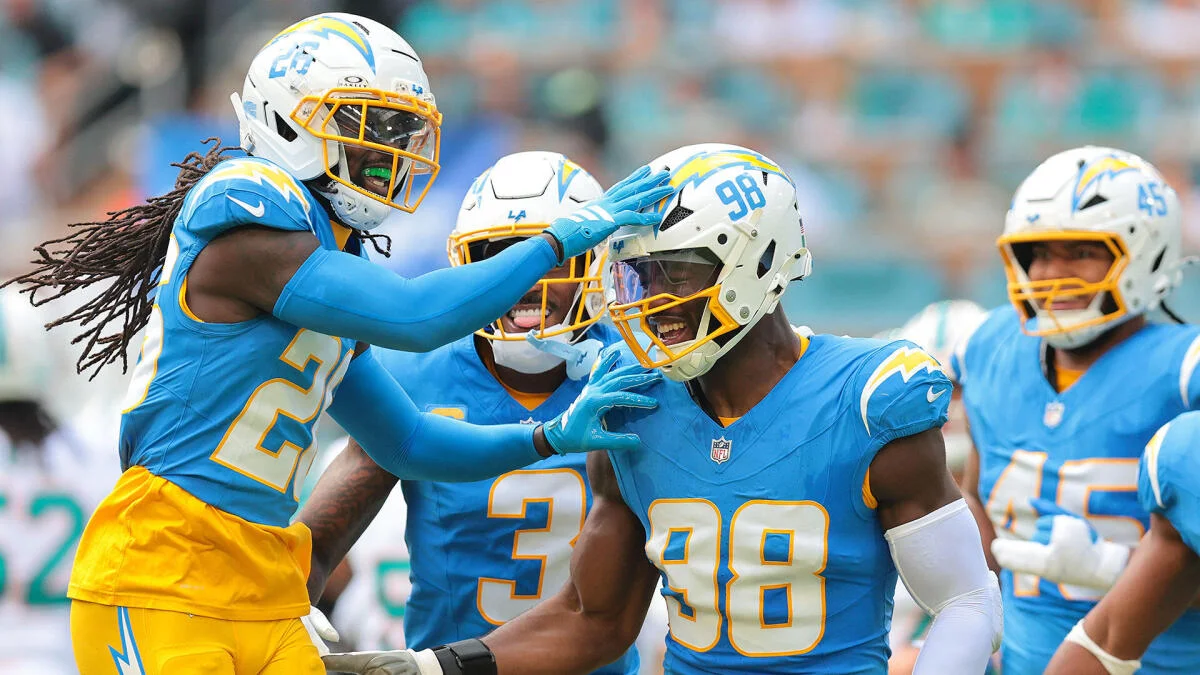
The Chargers vs Miami Dolphins match player stats tell a compelling story of speed versus structure, explosive offense versus tactical execution, and individual brilliance shaping the outcome on the field. This matchup was more than just a regular NFL game—it was a showcase of elite quarterbacks, dynamic wide receivers, resilient defensive units, and strategic coaching decisions that influenced every quarter. By analyzing the player statistics in depth, fans gain a clearer understanding of how the game unfolded, who dominated key moments, and which performances will be remembered long after the final whistle.
Quarterback Performances That Defined the Game
In the Chargers vs Miami Dolphins match player stats, quarterback play stood at the center of attention. Justin Herbert delivered a poised and calculated performance, demonstrating why he is considered one of the most technically gifted quarterbacks in the league. His passing accuracy, particularly on intermediate routes, allowed the Chargers to sustain drives and control possession. Herbert’s ability to read defensive coverages was reflected in his completion percentage, as he consistently exploited mismatches in the Dolphins’ secondary.
On the opposite sideline, Tua Tagovailoa showcased his trademark quick release and timing-based passing attack. His connection with Miami’s speedy receivers resulted in several explosive plays, pushing his passing yards into impressive territory. While Herbert focused on precision and patience, Tua emphasized rhythm and pace, making the quarterback comparison one of the most fascinating aspects of the match player stats.
Running Backs and the Ground Game Impact
The Chargers vs Miami Dolphins match player stats also highlight contrasting philosophies in the running game. The Chargers leaned on their running backs to maintain balance, using short gains to set up play-action opportunities for Herbert. The primary rusher consistently found gaps between the tackles, contributing solid yardage and keeping the Dolphins’ defense honest. In contrast, Miami’s rushing attack focused on speed and outside runs, utilizing misdirection to stretch the field horizontally.
Although Miami’s rushing yards per carry fluctuated throughout the game, timely runs in crucial moments helped sustain momentum. The statistical comparison reveals how both teams used the run not just to gain yards, but to dictate defensive alignments and create opportunities in the passing game.
Wide Receivers and Explosive Playmakers
One of the most exciting elements in the Chargers vs Miami Dolphins match player stats is the performance of the wide receivers. For the Chargers, the leading receiver dominated with crisp route-running and reliable hands, recording significant receiving yards and multiple first-down conversions. His ability to win contested catches gave Herbert confidence to throw into tight windows. Miami’s receiving corps, however, brought raw speed into the equation.
Tyreek Hill’s stat line was particularly eye-catching, as his yards after catch and explosive plays changed field position in an instant. Jaylen Waddle also contributed with precise routes and clutch receptions. The contrast between Los Angeles’ possession-based receiving and Miami’s big-play capability is clearly reflected in the statistical breakdown.
Tight Ends and Their Understated Influence
The Chargers vs Miami Dolphins match player stats would be incomplete without acknowledging the role of tight ends. While they may not always dominate headlines, their contributions were vital. The Chargers’ tight end served as a reliable safety valve for Herbert, especially on third downs. His receptions often came in high-pressure situations, extending drives and maintaining offensive rhythm. Miami’s tight end, meanwhile, contributed both as a blocker and receiver, helping neutralize the Chargers’ pass rush while adding modest receiving numbers. These understated performances show how tight ends contribute beyond raw statistics, influencing the flow and efficiency of offensive play.
Offensive Line Performance and Protection Metrics
An often-overlooked aspect of the Chargers vs Miami Dolphins match player stats is offensive line performance. The Chargers’ offensive line provided Herbert with relatively clean pockets, reflected in the low number of sacks allowed. Their pass protection enabled deeper route concepts and gave the quarterback time to scan the field. Miami’s offensive line faced a tougher challenge, particularly against the Chargers’ interior pass rush. While they allowed some pressure, their ability to adjust mid-game limited the damage and kept Tua upright for most of the contest. The stats related to sacks, quarterback hits, and pressures allowed reveal just how critical line play was to both teams’ offensive success.
Defensive Standouts and Tackling Efficiency
Defense played a significant role in shaping the Chargers vs Miami Dolphins match player stats. The Chargers’ linebackers were particularly active, leading the team in tackles and demonstrating excellent pursuit angles. Their ability to limit yards after contact was crucial in slowing Miami’s explosive offense. In the secondary, a Chargers defensive back recorded multiple pass breakups, disrupting timing routes and forcing contested throws.
Miami’s defense countered with aggressive blitz packages, resulting in key sacks and quarterback pressures. The Dolphins’ leading tackler consistently shut down short passes and runs, preventing the Chargers from generating easy yardage. These defensive statistics highlight how both teams relied on disciplined tackling and situational awareness.
Turnovers and Momentum-Shifting Plays
Turnovers are always a decisive factor, and the Chargers vs Miami Dolphins match player stats reflect their importance. A critical interception by the Chargers’ defense shifted momentum at a pivotal moment, halting a promising Dolphins drive. That single stat not only changed field position but also altered the emotional tone of the game. Miami responded with a forced fumble later in the match, showcasing their resilience and ability to capitalize on opportunities. These turnover-related stats underline how a few high-impact plays can outweigh dozens of routine snaps in determining the final outcome.
Special Teams Contributions and Hidden Yardage
Special teams often operate under the radar, but the Chargers vs Miami Dolphins match player stats reveal their hidden influence. The Chargers’ kicker delivered a near-perfect performance, converting field goals from challenging distances and adding valuable points to the scoreboard. Miami’s return specialist provided excellent field position with a long kickoff return, setting up a scoring opportunity that shifted momentum. Punting averages, return yards, and field position metrics all contributed to the strategic chess match between the two teams. These statistics remind fans that special teams efficiency can quietly swing the balance of a tightly contested game.
Third-Down Efficiency and Situational Stats
A deeper dive into the Chargers vs Miami Dolphins match player stats shows how situational performance separated the teams. The Chargers excelled on third down, converting a high percentage of attempts thanks to precise passing and effective route combinations. Herbert’s third-down passer rating stood out, reflecting his calm decision-making under pressure. Miami, while explosive, struggled slightly in these situations, relying more on first- and second-down gains. Red-zone efficiency also played a role, with the Chargers converting more of their opportunities into touchdowns rather than field goals. These situational stats often determine close games, and this matchup was no exception.
Time of Possession and Offensive Control
Time of possession is another revealing metric within the Chargers vs Miami Dolphins match player stats. The Chargers held the ball longer, utilizing sustained drives to control the tempo. This approach limited Miami’s offensive opportunities and kept their explosive playmakers on the sideline for extended stretches. Miami’s offense, however, made the most of its possessions, scoring quickly when opportunities arose. The contrast between methodical control and rapid scoring is clearly visible in the possession statistics, offering insight into each team’s strategic priorities.
Coaching Decisions Reflected in Player Stats
Behind every statistical line in the Chargers vs Miami Dolphins match player stats lies a series of coaching decisions. The Chargers’ play-calling emphasized balance and patience, which is reflected in evenly distributed passing and rushing numbers. Miami’s coaching staff leaned into their team’s speed advantage, designing plays that maximized yards after catch. Defensive adjustments were also evident, as both teams altered coverage schemes and blitz frequencies throughout the game. These strategic choices are etched into the stats, revealing how coaching philosophies translate into on-field results.
Comparative Analysis of Star Players
When comparing star players in the Chargers vs Miami Dolphins match player stats, the contrast becomes even clearer. Herbert’s stat line emphasized efficiency, with high completion rates and steady yardage accumulation. Tua’s numbers highlighted explosiveness, with fewer but longer completions driving Miami’s offense. On defense, the Chargers’ top pass rusher recorded multiple pressures, while Miami’s leading defender excelled in coverage. This comparative analysis shows that there is more than one path to success, and both teams leveraged their stars in distinct ways.
Impact of Injuries and Player Rotations
Injuries and rotations subtly influenced the Chargers vs Miami Dolphins match player stats. The Chargers rotated defensive linemen to maintain pressure, which is reflected in consistent pass-rush metrics across quarters. Miami adjusted its receiver rotations to exploit favorable matchups, spreading targets among multiple players. These adjustments kept both teams competitive and demonstrated how depth and adaptability are critical components of modern NFL success.
Statistical Summary and Overall Game Narrative
Taken as a whole, the Chargers vs Miami Dolphins match player stats paint a vivid picture of a game defined by contrast. Precision versus speed, control versus explosiveness, and structure versus improvisation all played out across four quarters. Every major statistical category—from passing yards to defensive tackles—contributed to the final narrative. While the scoreboard shows who won, the player stats explain why the game unfolded the way it did.
Conclusion
Ultimately, the Chargers vs Miami Dolphins match player stats reveal two elite teams with distinct identities and championship aspirations. The Chargers demonstrated discipline, balance, and situational excellence, while the Dolphins showcased speed, creativity, and explosive potential. Individual performances stood out, but it was the collective execution reflected in the stats that determined the game’s outcome. For fans and analysts alike, this matchup serves as a reminder that football is a game of numbers, moments, and strategy—all perfectly captured through a deep dive into player statistics.
You May Also Read: Knicks vs Brooklyn Nets match player stats