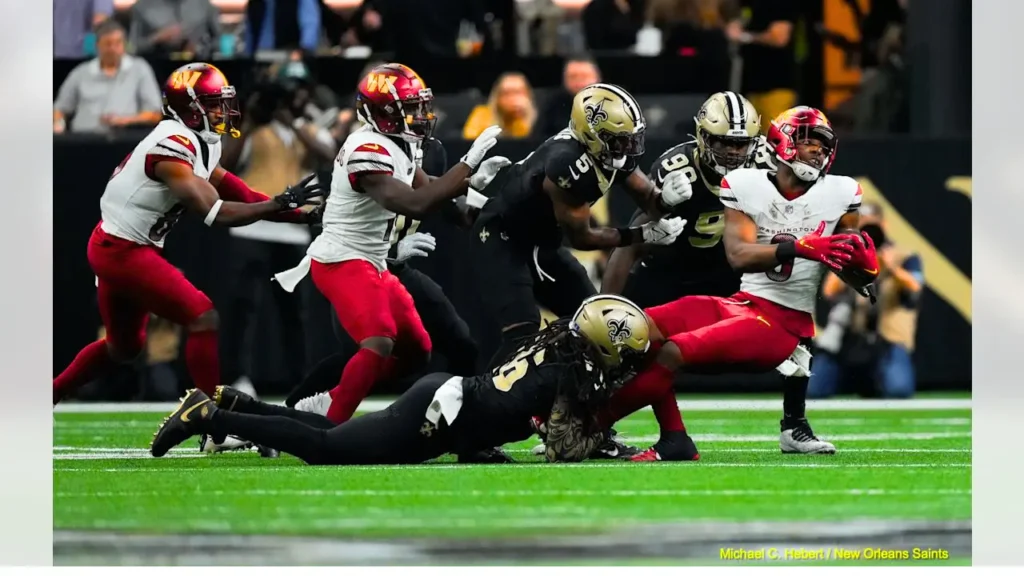
The Washington Commanders vs New Orleans Saints match player stats tell a detailed story of how two contrasting NFL rosters clashed in a game defined by momentum swings, tactical adjustments, and individual brilliance. From quarterback efficiency to defensive discipline, the statistical landscape reveals why this matchup continues to intrigue fans and analysts alike. By examining every major unit—offense, defense, and special teams—we gain a clearer understanding of which players most significantly shaped the outcome and how their performances reflected the broader team strategies.
Quarterback Performance Analysis and Passing Efficiency
Quarterback play stood at the center of the Washington Commanders vs New Orleans Saints match player stats, with both signal-callers showcasing distinct styles. Washington’s quarterback emphasized short-to-intermediate accuracy, completing a high percentage of throws while limiting turnovers. His stat line highlighted steady yard accumulation rather than explosive downfield plays, reinforcing the Commanders’ methodical offensive identity. On the Saints’ side, the quarterback leaned into deeper routes, reflected by a higher yards-per-attempt figure. While this aggressive approach produced chunk plays, it also led to increased pressure and occasional misfires, which proved pivotal in high-leverage moments.
Wide Receiver Contributions and Route Execution
The wide receiver statistics from the Washington Commanders vs New Orleans Saints match player stats illustrate how separation and route discipline impacted offensive rhythm. Washington’s receivers collectively posted strong catch percentages, particularly on third downs, demonstrating reliability and chemistry with the quarterback. Slot receivers played a crucial role, exploiting zone coverage for consistent gains. Conversely, the Saints’ receiving corps showcased explosive athleticism, with one standout wideout surpassing the 100-yard mark. However, drops and timing issues occasionally stalled drives, underscoring the fine margins that define NFL matchups.
Running Back Usage and Ground Game Efficiency
Running back performance was another key storyline within the Washington Commanders vs New Orleans Saints match player stats. Washington relied on a committee approach, spreading carries across multiple backs to maintain tempo and wear down the defense. This strategy yielded a respectable yards-per-carry average and sustained long drives. The Saints leaned more heavily on a primary ball carrier, whose power running produced several first downs and red-zone opportunities. Despite similar total rushing yards, Washington’s balance contrasted with New Orleans’ reliance on individual physicality.
Offensive Line Metrics and Pass Protection
Offensive line stats provide essential context when analyzing the Washington Commanders vs New Orleans Saints match player stats. Washington’s line allowed fewer quarterback pressures, reflecting cohesive blocking schemes and effective communication. This stability enabled the quarterback to progress through reads without constant disruption. New Orleans’ offensive line faced stiffer challenges, conceding more sacks and hurries. While they excelled in run blocking, inconsistencies in pass protection limited the Saints’ ability to sustain offensive momentum during critical stretches.
Tight End Impact in Blocking and Receiving
Tight end contributions often go unnoticed, but the Washington Commanders vs New Orleans Saints match player stats highlight their importance. Washington’s tight ends combined solid blocking with timely receptions, particularly in play-action scenarios. Their ability to chip edge rushers while releasing into soft zones created matchup advantages. The Saints’ tight ends were used more vertically, targeting seams in the defense. Though productive in yardage, they were less involved in blocking schemes, subtly influencing overall offensive efficiency.
Defensive Line Pressure and Sack Production
Defensive line performance emerged as a decisive factor in the Washington Commanders vs New Orleans Saints match player stats. Washington’s front four generated consistent pressure without excessive blitzing, resulting in multiple sacks and hurried throws. This disciplined approach kept the Saints’ offense off balance. New Orleans countered with aggressive pass-rush packages, occasionally overwhelming Washington’s protection. However, overcommitment allowed the Commanders to exploit gaps with quick passes, balancing out sack totals but shifting situational advantage.
Linebacker Tackle Counts and Coverage Responsibilities
Linebacker stats from the Washington Commanders vs New Orleans Saints match player stats reveal contrasting defensive philosophies. Washington’s linebackers recorded high tackle numbers, reflecting a bend-but-don’t-break approach that prioritized containment. Their coverage metrics also stood out, limiting yards after catch on short routes. The Saints’ linebackers were more aggressive downhill, producing tackles for loss and quarterback pressures. While impactful, this aggressiveness sometimes left vulnerabilities in intermediate coverage zones.
Secondary play significantly influenced the Washington Commanders vs New Orleans Saints match player stats, particularly in coverage efficiency and turnover generation. Washington’s defensive backs allowed fewer explosive plays, maintaining tight coverage and forcing contested catches. Interception and pass deflection numbers highlighted disciplined positioning. The Saints’ secondary took more risks, jumping routes in search of turnovers. This gamble produced moments of brilliance but also resulted in surrendered big plays that shifted field position.
Turnover Differential and Game-Changing Moments
Turnovers often define outcomes, and the Washington Commanders vs New Orleans Saints match player stats underline their importance. Washington protected the football, recording minimal giveaways while capitalizing on Saints’ mistakes. Each turnover led to points or favorable field position, amplifying their impact. New Orleans, despite forcing a turnover of their own, struggled to convert these opportunities consistently, illustrating how situational execution matters as much as raw statistics.
Red zone performance was a telling aspect of the Washington Commanders vs New Orleans Saints match player stats. Washington demonstrated efficiency inside the 20-yard line, converting a high percentage of trips into touchdowns. Creative play-calling and disciplined execution were evident. The Saints, while effective between the 20s, settled for field goals more frequently. This discrepancy in red zone success proved crucial in determining the final score margin.
Third-Down Conversion Rates and Drive Sustainability
Third-down efficiency often reflects offensive cohesion, and the Washington Commanders vs New Orleans Saints match player stats reveal a clear contrast. Washington converted a higher percentage of third downs, extending drives and controlling time of possession. Short-yardage play-calling emphasized quick reads and reliable targets. New Orleans struggled on third downs, particularly in long-yardage situations, where pass protection breakdowns limited options.
Special teams stats added another layer to the Washington Commanders vs New Orleans Saints match player stats. Washington’s punt coverage and return units consistently provided favorable field position, reducing offensive pressure. Their kicker remained reliable, converting all scoring opportunities. The Saints’ special teams delivered mixed results, including one long return offset by coverage lapses. These subtle differences cumulatively influenced momentum.
Advanced Analytics Breakdown and Efficiency Ratings
Diving deeper into advanced metrics further enriches the Washington Commanders vs New Orleans Saints match player stats by revealing efficiency beyond traditional box scores. Metrics such as expected points added (EPA) and success rate favored Washington, particularly on early downs where positive plays set up manageable situations. The Commanders’ offense consistently generated positive EPA through short completions and effective rushing, while the Saints’ EPA fluctuated due to drive-stalling sacks and penalties. These analytics confirm that Washington’s steadier approach produced more sustainable success across all four quarters.
Time of Possession and Tempo Control
Time of possession statistics from the Washington Commanders vs New Orleans Saints match player stats underscore Washington’s deliberate pacing. Sustained drives limited the Saints’ offensive opportunities and kept Washington’s defense fresh. New Orleans operated at a faster tempo but struggled to maintain rhythm due to incomplete passes and penalties. The contrast in tempo reflected broader strategic intentions from both coaching staffs.
Penalty statistics provide insight into discipline, and the Washington Commanders vs New Orleans Saints match player stats highlight notable differences. Washington committed fewer penalties, particularly on offense, avoiding drive-killing mistakes. The Saints accrued more infractions, including costly defensive penalties that extended Washington drives. These discipline issues compounded other statistical disadvantages.
Coaching Strategy Reflected in Player Usage
Coaching philosophy becomes evident through player usage patterns in the Washington Commanders vs New Orleans Saints match player stats. Washington’s balanced distribution of touches and snaps reflected an emphasis on unpredictability. New Orleans leaned heavily on star players, resulting in impressive individual stats but less overall balance. This divergence shaped both teams’ efficiency across quarters.
Second-half performance metrics from the Washington Commanders vs New Orleans Saints match player stats reveal how adjustments influenced momentum. Washington improved defensive pressure rates and maintained offensive efficiency, signaling successful halftime changes. The Saints showed flashes of adaptation but struggled to sustain drives, with declining third-down conversions and increased pressure allowed.
Individual Standout Performances and Impact Players
Several standout players emerged within the Washington Commanders vs New Orleans Saints match player stats. Washington’s quarterback and lead receiver consistently delivered in crucial moments, while a defensive lineman anchored the pass rush. For the Saints, a top wide receiver and primary running back produced impressive individual numbers. Despite these efforts, overall team efficiency favored Washington.
A holistic view of the Washington Commanders vs New Orleans Saints match player stats shows Washington leading in efficiency metrics such as third-down conversions, red zone success, and turnover margin. New Orleans matched or exceeded Washington in explosive plays and individual yardage but fell short in situational execution. This statistical contrast explains the final outcome more clearly than raw totals alone.
Conclusion
The Washington Commanders vs New Orleans Saints match player stats paint a comprehensive picture of a contest decided by discipline, balance, and situational mastery. While both teams showcased talented individuals capable of game-changing plays, Washington’s consistency across offensive, defensive, and special teams units proved decisive. These stats not only explain the result but also offer insights into how each team may evolve moving forward, making this matchup a valuable case study in modern NFL performance analysis.